
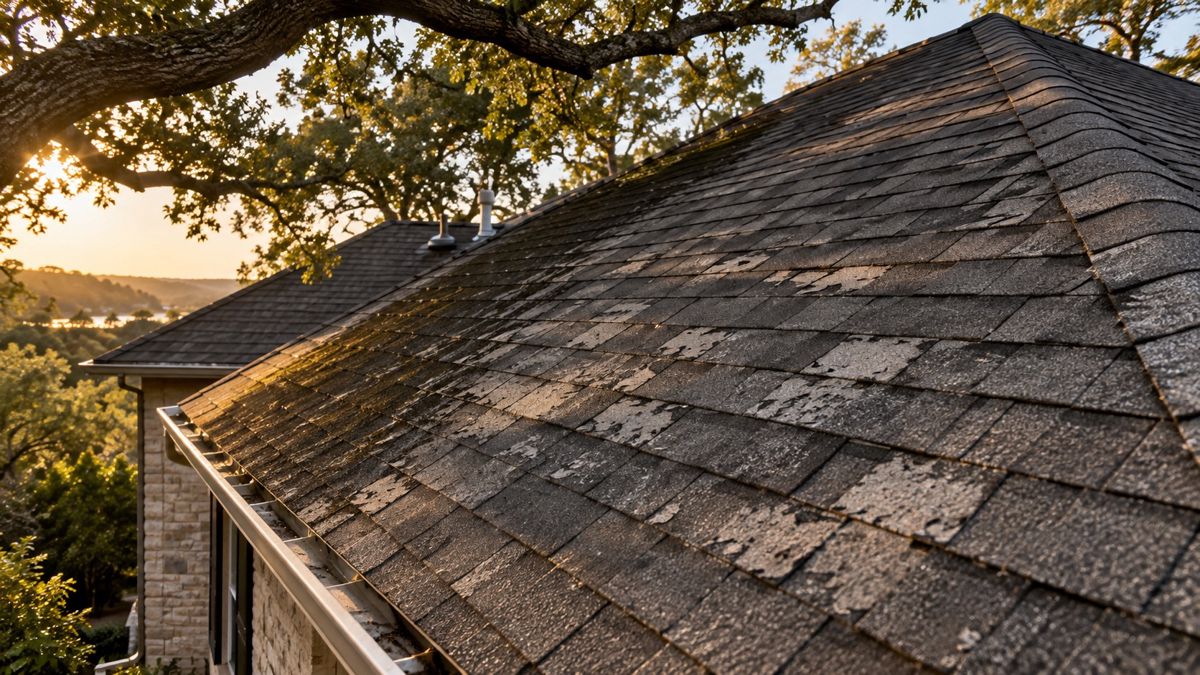
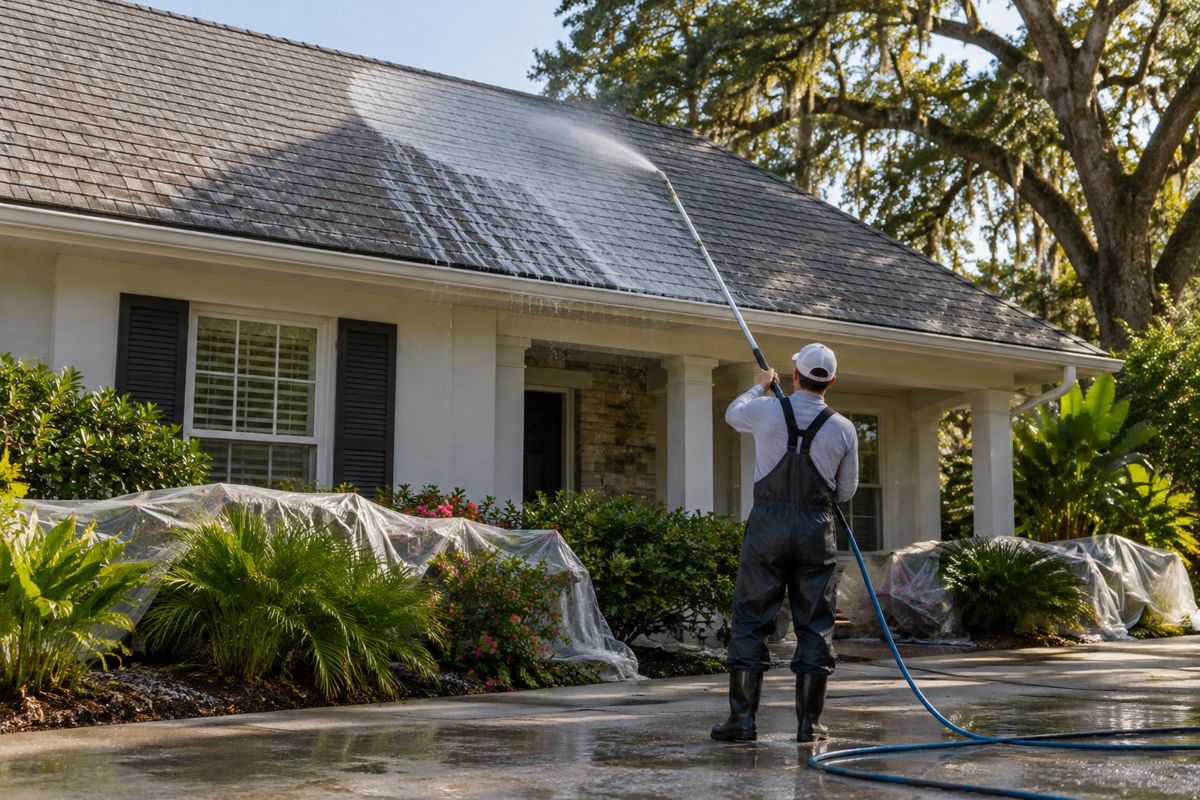
The short answer: yes, high pressure power washing can damage asphalt shingles. A hard jet strips the protective granules off the surface, can push water under the edges of the shingles, and can shorten the life of the roof. Even when the roof looks cleaner afterward, the harm may only show up months later as leaks or a worn, bald surface.
Austin roofs collect dark algae streaks, pollen and oak debris, so the urge to blast them off is understandable. This guide explains what high pressure does to shingles, why Central Texas roofs are especially vulnerable, and how to get the roof clean without taking that risk.
What makes asphalt shingles easy to damage?
An asphalt shingle is not a solid slab. It is a fiberglass mat soaked in asphalt, with a coating of tiny mineral granules pressed into the top. Those granules do real work. They shield the asphalt from ultraviolet light, they add some fire resistance, and they help shed water.
Each shingle also relies on a strip of adhesive that bonds it to the course below. That bond keeps wind and rain from getting under the tabs. It is strong enough for weather, but it was never designed to resist a narrow stream of water driven at close range.
Texas heat makes things worse. Roof surfaces get very hot in summer, and over the years the asphalt dries and gets brittle. An older roof has less margin for rough treatment than a new one.
What actually happens when you blast a roof with high pressure?
Several kinds of damage can happen at once, and most are invisible from the ground.
- Granule loss. The jet knocks granules off in clouds. Bare asphalt underneath is exposed to sun and ages much faster.
- Broken seals. Water driven upward lifts the tabs and breaks the adhesive strip, so the shingle can flap in wind or let rain in.
- Water under the shingles. Pressure forces water past the overlap onto the underlayment and roof deck, where it can cause rot or stains inside.
- Wand marks. Uneven passes leave clean stripes and worn lines that stay visible.
- Bruising and cracks. Old, brittle shingles can crack under a hard jet.
Roofing manufacturers and trade groups generally advise against pressure washing shingles. Using a method they warn against may also complicate a warranty claim, so check your documents if the roof is still covered.
Why are Central Texas roofs at greater risk?
Several local factors stack up against an Austin roof.
Hail history
Central Texas gets hail, and many roofs have been hit at some point, sometimes without the owner noticing. Hail loosens granules and bruises the mat. Pressure on top of existing damage can turn a weak roof into a leaking one.
Heat and age
Long, hot summers dry out asphalt. A roof that is already worn is more likely to lose granules in a wash than a young one.
Shade and algae
Live oaks, cedar elms and other mature trees shade north-facing slopes, where black algae grows best. That is the streaking most owners want gone, and it often sits on exactly the sections that are most worn.
Steep and tall roofs
Many Austin homes have steep or multi-level roofs. Working on them with a heavy pressure wand adds a real fall risk for anyone who is not trained for it.
How can you tell if a roof was damaged by pressure washing?
If a roof has recently been washed with high pressure, look for these signs from the ground and from inside the house:
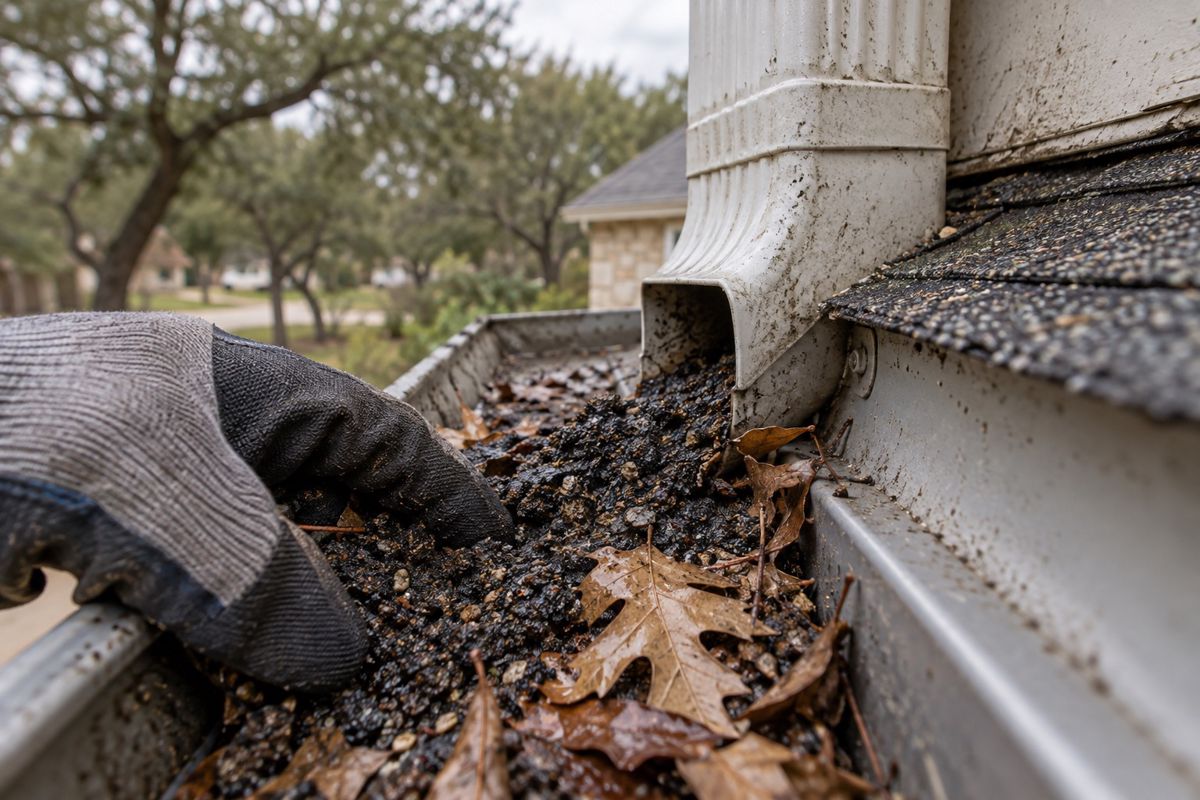
- Dark grit in the gutters or at the bottom of downspouts.
- Bald or shiny black patches where granules used to be.
- Tabs that look lifted, curled or uneven.
- Clean stripes or lines that follow the wand.
- Fresh water stains on ceilings, around vents or near the attic edge.
It is normal to find some granules in the gutters on a new roof. A big pile after a wash is a warning. If you see these signs, ask a roofer to inspect the roof before the next big storm, and check your documents for any warranty. Do not climb up yourself to check, especially on a steep or wet roof.
What is the safe way to clean a roof?
The accepted approach is soft washing. A cleaning solution is applied to the roof, left to kill the algae, moss and lichen, and then rinsed away with low-pressure water. The solution does the cleaning, not force. That is why it can be done without scarring the granules.
- Check the roof first. Look for hail damage, loose shingles and soft spots. A roof in poor shape should be repaired or replaced before cleaning.
- Protect the surroundings. Wet the plants, close windows and move cars so runoff does not harm anything.
- Apply the solution. It is sprayed evenly at low pressure from a safe position.
- Let it work. Algae dies and begins to release from the shingles.
- Rinse gently. Low-pressure water carries the treated growth off the roof.
Results vary with the amount of growth, and some stubborn streaks keep fading over the following weeks as rain does the rest. Tile, metal and flat roofs need their own care, so tell any contractor what you have.
Do I need to clean my roof at all?
Not always. Light streaks on a sunny roof are mostly cosmetic. But moss and lichen hold moisture against the shingles and can lift their edges, and heavy growth wears a roof faster. Dark streaks also soak up more heat than clean shingles. Some HOAs send notices about stained roofs, and a clean roof helps when you list a home.
If you want to slow regrowth, ask a roofer about algae-resistant shingles or metal strips near the ridge. Trimming branches that shade the roof also helps it dry out faster after rain.
How do I find the right help in Austin?
Ask any contractor three things before you book. What method will you use on my roof? Will you use pressure on the shingles? Can I see proof of insurance? A good answer to the first two is low pressure and no. Ask for the scope in writing, and have a roofer check the roof first if there has been recent hail.
Our roof cleaning page explains how soft washing works on Austin roofs and what changes the price. If the walls below are streaked too, see house washing, or call (512) 555-0138 to describe your roof.